All posts by Anderson Peak Performance

Are You Tired of Being Tired?

Everybody feels tired occasionally. After all, we do live in an increasingly active and stressful world!

But what isn’t common is fatigue over a long period of time. If you are experiencing persistent and debilitating exhaustion that affects your everyday life, you may be suffering from Chronic Fatigue Syndrome (CFS).

Tips to deal with long term fatigue from the Anderson Peak Performance blog

Chronic Fatigue Syndrome affects everyone differently.

While some people only suffer for a few months, for others it may last for years. Symptoms my be mild for some and only slightly disruptive to everyday life and for others it can become so debilitating that it diminishes overall quality of life. Moderate symptoms may result in disrupted sleep patterns, multiple achy joints, headaches, difficulty concentrating, low energy  and reduced mobility. Chronic Fatigue Syndrome can severely impact overall health, lifestyle, career and relationships. It has no identifiable medical or psychological effects to account for.

Usually, CFS develops when people are in their early twenties to mid-forties, although it can affect children too. However, it is unclear what actually causes Chronic Fatigue. There is some evidence that stress may trigger CFS in people who are at risk for the disease because of genetic factors. Others in the medical community theorize it is a result of  stress or a viral infection, while others think it may be due to prolonged stress on the immune system.

Whatever its cause, Chronic Fatigue Syndrome is a serious condition. That is why the Anderson Peak Performance team wants to help you to identify the symptoms early. This way, we can deal with the condition together, helping you to achieve peak performance once again!

What are the symptoms?

► Fatigue (especially 24 hours after an physical activity)
► Decreased memory and/or concentration
► Restless sleep
► Psychological issues (depression, irritability or panic attacks)
► Unexplained muscular pain
► Multiple joint pain without redness or swelling
► Severe headaches
► Symptoms similar to irritable bowel syndrome (Nausea, bloating, diarrhea, and/or constipation)
► Enlarged lymph nodes (small glands of the immune system) in armpits and neck
► Dizziness or problems with balance
► Feeling of decreased coordination

Many people who suffer from CFS will seek a medical opinion. While there is no definitive test for Chronic Fatigue Syndrome, making it difficult to make an official diagnosis, a general practitioner can rule out other health issues. Once they have, a visit to a Doctor of Chiropractic is a great form of relief. It can help decrease symptoms, improve energy, help to restore your body’s level of function and overall quality of life.

Here are our tips to deal with long term fatigue:

1. Eating a healthy balanced diet.

Anderson Peak Performance can provide personalized nutrition plans to help you maintain energy. Need a quick energy boost? Here are some healthy, easy-to-prepare snacks to combat fatigue:

► Cereal with yogurt and fruit
► Mixture of dried fruits, nuts & seeds
► Organic fruit or granola bars
► Steel cut oatmeal or whole grain quinoa
► Fruit, including figs
► Almond butter
► Dark Chocolate
► Sweet potatoes
► Veggies & hummus
► Green juices

2. Cut out the caffeine!

Try gradually reducing your caffeine drinks (coffee, tea and soda) over a three-week period. Completely cutting out caffeine for a month can help you feel far less tired than when you use it as a stimulant! Also, reduce the amount of alcohol drunk before bedtime. Without a glass of wine before bed, you will get a better night’s sleep and have more energy the following day.

3. Drink more water.

Dehydration can cause fatigue. Hydration after exercise will help retain your energy. In fact, world health organizations recommend drinking around 64 ounces (2 liters) of water a day or 80% of your body weight.

4. Reduce stress to combat fatigue.

A lot of energy is used up on stress. Try introducing relaxing activities into your day. For example, listening to music, reading or socializing with friends are great ways to relieve anxiety. Another practice could be through calming breathing exercises. Meditation and yoga will help with this.

5. Spinal alignment is a great way to decrease symptoms.

Patients experience a natural improvement in energy once their bodies are properly aligned. Misalignment in your spine is called a vertebral subluxation. Research has proven that by removing the pressure on the nerve from the misalignment by a series of Chiropractic adjustments, normal function can be restored. Detecting and removing those blockages in the spine can increase your ability to heal via the communication of the nervous system to the rest of the body.

If you experience any of the above symptoms, and are seeking a natural alternative, get in touch with the Anderson Peak Performance Team today to schedule an appointment!

Please mention this blog for a Courtesy Consultation with Dr. Jeannette M. Anderson, Chiropractor. 

Book your appointment via our online booking form, email frontdesk@andersonpeakperformance.com, or call our office at 212-581-5776. You can find us in Midtown at 39 West 56th St. 4th Floor New York, NY 10019.

Meet Dr Jeannette M. Anderson

Find out more about Dr. Jeannette M. Anderson: founder, CEO and Chiropractor at Anderson Peak Performance.

Find out more about Dr. Jeannette M. Anderson: CEO, founder and Chiropractor at Anderson Peak Performance

How did Dr. Jeannette M. Anderson begin her career?

Dr. Jeannette M. Anderson has over 27 years of trustworthy, professional experience as a Chiropractic doctor. It was this experience which lead to her becoming the founder and CEO of Anderson Peak Performance. The Manhattan-based Chiropractic and wellness center has a tremendous following among professional athletes and performance artists of international reputation. Both appreciate the quality of her care and her discretion.

Acclaimed for its excellent sport science and rehabilitation programs, Dr. Anderson received her Chiropractic degree from Logan College of Chiropractic in St. Louis, Missouri. An accomplished marathon runner, cyclist and skier, she committed her career to the chiropractic care and enhanced performance of avid athletes and performance artists.

After graduation from Logan College, Dr. Anderson trained as an extern. She specialized in functional movement, athletic injury and rehabilitation,  obtaining an Athletic Training Certification from Brooklyn College. Next, she went on to graduate studies in exercise physiology at LIU Brooklyn.

What did Dr. Jeannette M. Anderson do next?

Dr. Anderson continues to improve upon and update her knowledge of Chiropractic and Physio in the Sport’s Performance arena. She did this by completing advanced certifications in the following:

• Chiropractic technique
• non-force instrument adjusting
• the Activator Method
• Manual Therapy using the Graston Technique
• Rehabilitation research with the Waff Activation/Deactivation System
• Movement Analysis using the Eumotus Infrared Technology

Dr. Anderson’s expertise in athletic care resulted in her second World Championship as Chiropractor for Team USA. Most recently, she was appointed for the 2013 USA Paracycling World Championship. Most noteworthy, Dr. Anderson has been appointed at the Olympics! She was the Team Chiropractor for the United States Track and Field Team at the 2004 Olympic Games in Athens, Greece.

Due to her involvement at the Athens Olympics, Dr Anderson has been  invited to continue treating US athletes at the Winter Olympics Training Center in Lake Placid over the last few years. For over 20 years she has supported younger track athletes locally in NYC, domestically and internationally through Chiropractic, lecturing and outreach into the local communities.  She continues to  treat nationally ranked US junior athletes competing in Track and Field events.

Dr. Anderson’s history as a Breast Cancer Survivor helped increase her compassion and interest in helping women balance their Female Health Issues with an active lifestyle over the last 12 years. She continues to consult and treat women with the physical, mental and emotional challenges of hormonal imbalance. This includes all phases of the female reproductive cycle and menopause. Balance is achieved through a holistic model of Chiropractic, nutrition, exercise and complementary medicine. She uses a team of wellness practitioners inclusive of massage, acupuncture, functional medicine and podiatry.

What is the philosophy of Dr. Jeannette M. Anderson?

Outside of her work at Anderson Peak Performance, Dr. Anderson maintains a vigorous fitness regime. Also, she devotes significant time to charity and the apprenticeship of new languages. Her philosophy is:

“A FULL LIFE IS NOT WHAT YOU GET FROM THE WORLD, BUT WHAT YOU GIVE IT”.

Dr. Anderson believes in a holistic (“total person”) approach to healing. This combines elements of the mind, body and spirit. She believes a healthy life is a life lived in balance. By looking at the holistic body, Dr. Anderson recognizes the power of Chiropractic.

Do you want to find out more about Dr. Jeannette M. Anderson? Click here to discover more information!

Iliotibial Band Injury

If you are a keen runner, you will know that sustaining an injury can be devastating.

What is Iliotibial Band Injury?

One of the most common injuries for runners is an Iliotibial Band Injury (or IT Band Injury). Affecting between 8 – 10% of all running injuries, it is caused by tightness and inflammation of the iliotibial band. This is a ligament which travels from the outside of the thigh, starting at the hip and working its way down to the knee crossing two joints.

The main purpose of the IT band is to stabilize your foot/ankle complex as it goes through the main three (3) phases of gait:  Heel strike, mid-stance and toe-off. Once the band becomes inflamed, knee movement will become extremely uncomfortable while running becomes extremely painful.

In this blog, Anderson Peak Performance will explain the symptoms and causes of IT Band Injury. We will also tell you how to manage and help prevent it so your injury does not become a chronic one.

What are the symptoms?

The main symptom is pain along your iliotibial band, possibly starting at your thigh and travelling down to your knee.  The most common areas of inflammation is at the Origin (above the hip joint), Midpoint (between the hip and knee) or Insertion (below the knee on the tibia (shin bone).  It may begin as stiffness, but can quickly turn into a sharp, stabbing pain. You may also notice swelling around the knee on the lateral (outside) aspect and/or a tightness behind your knee. Do not fall into the trap of many runners in thinking you have a knee injury! If you feel a pain on that outside area of your leg when you bend your knee at 45 degrees, you are most probably suffering from an IT Band Injury.

What are the causes?

This darn thing called fascia.  It’s a tough membranous material that helps hold muscle and allows the muscle membrane to contract and glide under the skin.  The IT Band is a THICK,  and to many runner’s, troublesome sheath of fascia.

Just before reaching the knee, the IT band becomes thinner. Friction can occur as the band and the bone rub together, causing inflammation at or around the insertion point. Any repetitive activity which forces the leg to turn inward makes this inflammation worse. For example: an uneven gait, altered bio-mechanics of the foot/ankle, knee, hip, low back, spine and pelvis due to a functional or structural imbalance. This can be caused by improper training,  running in worn-out shoes, past history of overuse injury or the aging athlete.

How can I prevent it?

Here are some of our suggestions for preventing an Iliotibial Band Injury:

► Consult a biomechanics specialist, like a Doctor of Chiropractic, for an athletic evaluation and Movement Analysis.  I suggest using the EuMotus Technology that we have at the office for a comprehensive evaluation.

► As soon as you feel any pain, decrease the amount of miles you run, cross train if possible and administer some prehab. Ignoring your injury will not make it go away – it may even result in chronic pain!

► If your running shoes are worn along the sole, replace them. Running in worn-out shoes is a key cause of IT Band Injury. In fact, many researchers suggest replacing shoes between 300 to 500 miles after first wear.

► Don’t run on hard surfaces, such as concrete. The iliotibial band helps stabilize the knee as you run. If you repeatedly run on hard surfaces, your knee will be put under continuous strain as there is little shock impact, unlike on grass. The friction between the band and the bone will become greater, resulting in IT Band Injury.

How can I treat it?

As mentioned before, prehab of RICE (Rest, Ice, Compression and Elevation) and foam rolling is a great way to treat an ACUTE IT Band Injury. But if you are trying to keep up or increase your fitness, don’t panic! While taking a break from running, you can cross train. Sports such as swimming, cycling, or rowing have NO impact force through the lower biomechanical chain. This means no strain will be put on your knee, unlike with other cardiovascular workouts.

As with many injuries, stretching will help. In addition, massaging the inflamed area may also help to reduce any tightness or strain. A foam roller or tennis ball will work well for this!

However, if RICE and your home regimen  does not improve after 3-4 weeks, it may be best to see seek professional help. This is where Anderson Peak Performance comes in.

Dr. Jeannette Anderson has over 27 years of professional sports experience, including being Medical Team Chiropractor for the National High School Track & Field Championships for over 20 years. Having run almost a dozen marathons, Dr. Jeannette knows how important it is to stay in peak performance. This is why you can trust the Anderson Peak Performance Chiropractic team with your IT Band Injury.  With the EuMotus technology for evaluation of body movement, to cutting edge rehabilitation modalities like Graston Technique, Cold Laser and the Waff, Anderson Peak Performance has the tools to keep you at your Peak Performance.

If you have any questions about Iliotibial Band Injury treatment at  Anderson Peak Performance, please call us on 212-581-5776, just mention this article for a Courtesy Consultation with Dr. Anderson.

You can also book an initial consultation online via our booking form.

Chiropractic IS safe for children!

At Anderson Peak Performance, we often get asked if chiropractic is safe for children. In response, we have decided to write this article to answer all your questions.

chiropractic is safe for children

What is chiropractic?

Chiropractic offers early diagnosis and treatment of mechanical disorders that effect the function on the musculoskeletal system. At Anderson Peak Performance, we believe in a patient-doctor partnership and hands-on approach, helping you to build momentum, balance and velocity. This means we don’t just treat the body physically though hand treatment of the bones, muscles and joints. We also blend lifestyle, environmental and wellness choices, such as diet and lifestyle, to maintain your chiropractic wellness!

Why would my child need chiropractic care?

A child’s body goes through rapid change from birth to adolescence. To ensure that everything is progressing as it should be, it is important to monitor your child’s growth and development. However, bones, muscles and joints all develop so quickly, so parents may struggle to identify if there is anything wrong with their child’s development as they lack in depth knowledge in child anatomy.

At Anderson Peak Performance, we have that knowledge. As chiropractors, we can perform simple assessments to determine if there are any issues which could effect your child’s development. This could be issues with posture, muscle weakness or tightness, or other biomechanical issues. We can also help with a number of other conditions, including:

→ behavioral or digestive issues
→ growing pains
→ sports related injuries (e.g. sprains or strains)
→ trouble sleeping
→ issues with breastfeeding or latching on
→ co-ordination issues
→ colic (excessive crying for no apparent reason – often suffered by babies)

We can also monitor the growth and development of your child to ensure any issues are located as early as possible to prevent any further problems in later life.

But is chiropractic safe for my child?

The short answer is yes! Chiropractic is safe for all children, including babies.

The long answer is that we use different treatment methods for children that we do for adults. These techniques use far less force, focusing instead on soft tissue therapy and joint mobility. In fact, when treating babies we use only the pressure of our fingertips – this is equal to the amount of force used to test if a tomato is ripe at the grocery store!

You must remember that chiropractors are highly skilled in treating the musculoskletal system. This means we can perform treatments in the safest possible way and with the greatest of care on all of our clients, including children.

If you believe your child would benefit from chiropractic care at Anderson Peak Performance, please call us on 212-581-5776. You can also book an initial consultation online via our booking form.

Golfers Elbow Diagnosis and Treatment

Golfers Elbow diagnosis and treatment by Anderson Peak Performance Chiropractors in New York

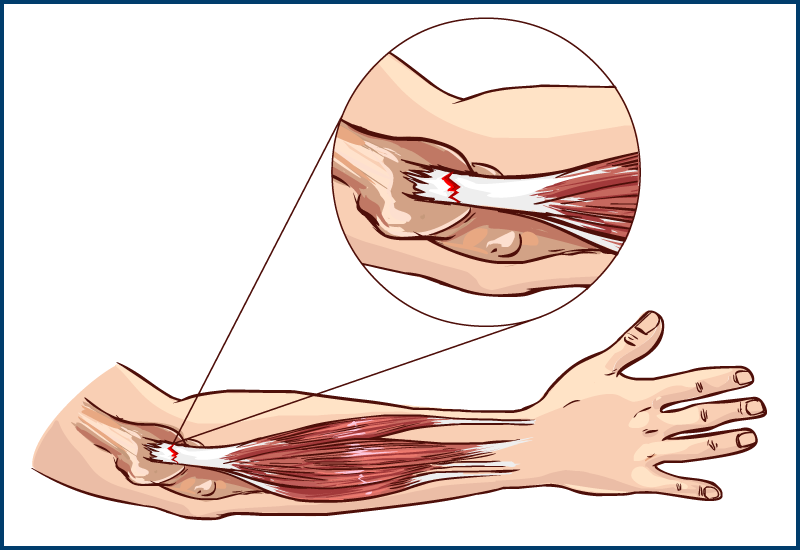
Golfers Elbow (or to use its medical term, ‘Medial Epicondylitis’) is very similar to Tennis Elbow. A result of overuse, Tennis Elbow causes pain to the outside of the arm. Golfers Elbow, meanwhile, causes pain to the inside of the elbow.

At Anderson Peak Performance, we explain the symptoms, causes and treatment that our practice can provide, allowing you to return to your full fitness in the shortest possible time.

SYMPTONS OF GOLFERS ELBOW

The main symptom of Golfers Elbow is pain and tenderness to the joint on the inside of the elbow. This is a bony part called the ‘Medial Epicondyle’. Generally, you will experience a general weakness in the wrist. Such pain will be continuously reproduced when you bend your wrist downwards against resistance.

‘Medial Epicondylitis’ is a gradual process. It often starts with an uncomfortable niggle with recurrent stiffness. Left untreated, this niggle will develop into a very painful injury, resulting in a loss of function.

THE CAUSES OF GOLFER’S ELBOW

Golfers Elbow is caused by repeated bending of the wrist or wrist flexion against resistance. This is often more pronounced when playing golf and holding a golf club, hence the name Golfers Elbow. However, it isn’t specific to golf. Golfers Elbow can also occur in athletes who participate a lot in throwing actions, as well as occupations that require repetitive computer work. Medial Epicondylitis usually tends to occur after a sustained period of repeated overuse.

Pain occurs from the tendon of the wrist flexor muscles. This is a result of their attachment point becoming inflamed and painful on the inside of the elbow.

TREATMENT OF GOLFERS ELBOW

As with all painful and inflamed injuries, these simple and effective treatments are always recommended:

► Rest
► Ice
► Compression
► Elevation

Apply a cold compress (e.g. ice wrapped in a towel) and apply to the injured area for 10 – 15 minutes every hour. Following the first few hours of compress, this can be reduced to 3 to 4 times a day or as the pain requires. When visiting the Anderson Peak Performance rehabilitation program, depending on the chronic pain of the injury, applying heat to the area may be more beneficial.

With most muscle injuries, Golfers Elbow can only heal if it is allowed to rest. Repeated usage will only inflame the joint more. Continued usage of the wrist can result in the injury becoming a chronic pain, which is far more difficult to treat.

After 3 days of the cold compress treatment, apply some heat to the joint and invest in using an elbow support. If the pain becomes chronic then look to invest in an actual elbow brace. This helps by taking the strain off the tendon by applying pressure across the muscles, changing the angle of pull on the tendon and relieving tension around the painful part of the tendon.

ANDERSON PEAK PERFORMANCE TREATMENT

When you come and see us for treatment at Anderson Peak Performance, we apply Sports Massage treatment techniques to both the tendon and the connecting muscles. If you are suffering from chronic pain in both the wrist and elbow, we apply what is called a cross friction massage. We apply this technique if the injury has not responded to initial rest and the cold compress treatment. When applying the sports massage, we work on the forearm helping to reduce the tension in the muscles. In turn, this will improve their function and ultimately help reduce the strain on the elbow tendon. Cross friction massage helps to increase the blood flow to the areas of injury, so will assist in healing the joint faster.

If you are experiencing chronic pain in your wrist and elbow, please call us on 212-581-5776. Alternatively, you can book your initial consultation online via our booking form.

Happy New York Marathon!

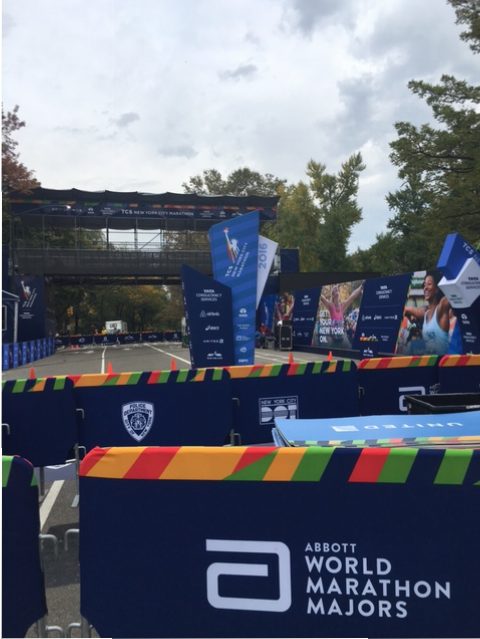
The New York City Marathon

T-minus 2 days and counting left to go before you run one of the world’s LARGEST and greatest races, the New York City Marathon! The biggest question now that you have completed your training and are preparing for your race is “Have you mentally visualized yourself crossing the finish line?” This is what successful runners do. They strategize what they will look and feel like the entire race course of 26.2 miles, in addition to their splits during the race. This is a #1 priority because the mind is stronger than the body.

Let me give you 3 easy tips as I have run almost a dozen New York City Marathons and have been teaching runners to become champions for over 25 years…

1. Get quiet, shut your eyes and mentally image that finish time that you are goaling for… see it on the board.
2. Imagine how you will feel when you cross that finish line. Will you raise your arms in victory? Will this be one of the biggest accomplishments of your life?
3. In your mind’s eye, see what you you look like. What are you wearing? What is your body posture? Have you given it everything you have?

This is your race, your New York City Marathon. Do your mental imaging and own it!

Best of luck to all of you out there running this weekend in the New York City Marathon!

Dr. Jeannette M. Anderson

The New York City Marathon